Articulate Tree
  • Home
  • Food
  • Embroidery
  • Historical Clothing
  • Fencing
  • Home
  • Food
  • Embroidery
  • Historical Clothing
  • Fencing

Articulate Food

Sugar Plate

13/8/2025

0 Comments

 
Picture

Recipe

Ingredients
  • 29g of egg white
  • 300g (11oz) icing (confectioners’) sugar, sifted
  • 10ml Rose water
  • 2.5 teaspoons of gum tragacanth
Note: you will need an extra 50-100g of sifted icing sugar to incorporate until the dough is firm.
  
Method
  • Put the egg white into a large mixing bowl and beat until white
  • Soak the gum traganth in the rose water in a small bowl, stir until it forms a gummy ball
  • Add gum/rosewater ball to the egg white
  • Using the dough attachments slowly incorporate the icing sugar
  • Form into a dough (also known as pastillage)
  • Kneed and add sugar until the dough is firm and on a smooth surface does not stick as you kneed
  • Form into a smooth ball
  • Gently roll with a smooth rolling pin, turning over regularly so it doesn’t stick to the surface
  • Cut to shape.
 
Note: When using moulds, make sure to use a soft toothbrush with oil (e.g. rice bran) and ensure there is a very thin layer inside before pressing in the dough. 

Background

I became interested in learning about sugar paste as a way to contribute to the culinary life of my household as I cannot assist in the kitchen due to my many allergies. Taking the advice of his Excellency Master Drake Morgan, I made my first attempt at sugar plate using a pre-made modern paste, but was unsatisfied so I decided to learn how to make the paste myself.

I translated the Sir Hugh Plat recipe (Plat, 1602) , and then looked at other translations suggested to me by Baron Morgan.
  • Ingredients Makes 350g (12oz)
  • 1 egg white
  • 300g (11oz) icing (confectioners’) sugar, sifted
  • 10ml (2 tsp) gum tragacanth
Method: Put the egg white into a large mixing bowl. Gradually add enough icing sugar until the mixture combines together into a ball. Mix in the gum tragacanth, and then turn the paste out on to a work board or work surface and knead the pastillage well. Incorporate the remaining icing sugar into the remainder of pastillage to give a stiff paste.
(Smith, 2017)

Drake’s recipe was similar and included rosewater
Ingredients
  • 1 egg white from a 60g egg to
  • 300g (11oz) icing (confectioners’) sugar, sifted
  • 1 or 2g gum tragacanth powder
  • 10ml Rosewater
Method: Combine egg, tragacanth powder and rosewater. Slowly add the sugar until no more will absorb.
(Morgan, 2019)

Bibliography
Morgan, D. (2019, June 13). Sir Hugh Plat: The Making of Sugar Paste (Email). Brisbane.
Plat, S. H. (1602). Delights for ladies . London.
0 Comments

Analysis of Rosewater Brands

6/2/2022

0 Comments

 
In order to pick the best tasting rosewater for different purposes I thought it best to look at all the easily available rosewaters in Australia at supermarkets and over the internet. I have analysed them based on flavour and fragrance.
To make it fair, I considered their taste and odour before cooking them into Rosewater Syrup (Cordial). I also smelled their fragrance during cooking. Each taste test had at least a half hour break between so I could cleanse my palate.
This is my subjective analysis and opinion.
Cortas (Ingredients: Rosewater)
  • Flavour: Complex, subtle and earthy with a pleasant aftertaste.
  • Fragrance: earthy rose, not floral or perfumed.
Chef’s choice (Ingredients: Distilled Water, Natural Rosewater, Rose Flavour)
  • Flavour: Virtually no flavour.
  • Fragrance: Potpourri, slightly dried rose odour.
Greenleaf (Ingredients: Rosewater essence and water)
  • Flavour: Weak, overly floral taste.
  • Fragrance: floral, simple strongly perfumed. Fragrance cooks off quickly.
Maharaja’s Choice (Ingredients: Rose extract and water)
  • Flavour: sour front of mouth without much rosewater flavour.
  • Fragrance: Sharp odour. Doesn’t really smell of roses.
Al-Rabih Rosewater (Ingredients: distilled water over extract of rose)
  • Flavour: Light, natural rose flavour.
  • Fragrance: Pleasant and complex fragrance with damask, musky undertones.
I did not include Queens Rosewater extract because it is not really competing in the same space. Queens is very, very strong and suitable for sweets which need an intense hit of flavour such as Sugar Plate rather than the more subtle flavour needed for making Marchpane.
Overall winner was Cortas, but a good runner-up was Al-Rabih. 
0 Comments
Subtleties

29/1/2022

0 Comments

 
Picture
or food as entertainment
​
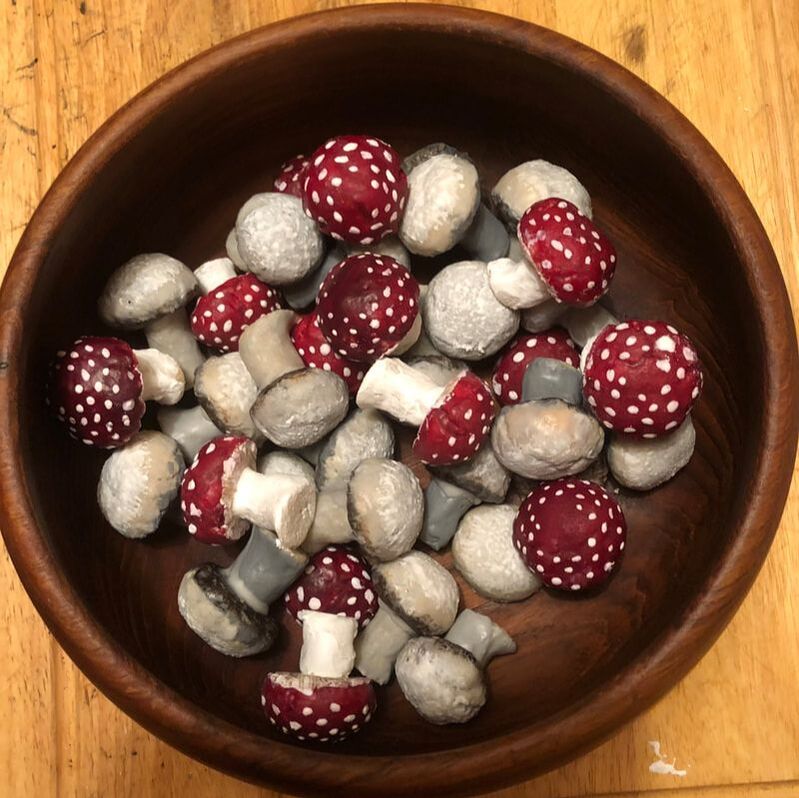
Subtleties, or food made to look like something else, was a type of entertainment at feasts. Here I have shaped almond macaroons and marchpane into mushrooms and painted them with a coloured sugar paste made of icing sugar, rose spirit and food colouring. This bowl of mushrooms were served at a feast and much enjoyed. 
0 Comments

Lemon Syrup (Cordial)

29/1/2022

0 Comments

 
Picture
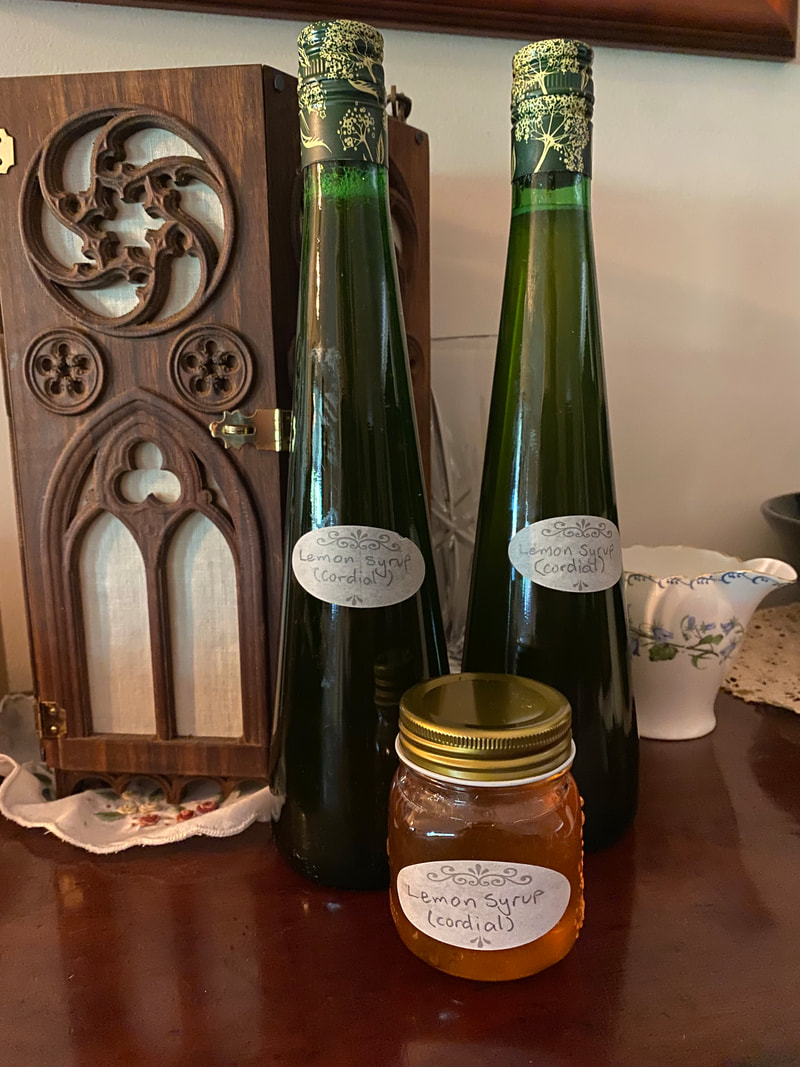
Gluten Free. Dairy Free. Vegan.
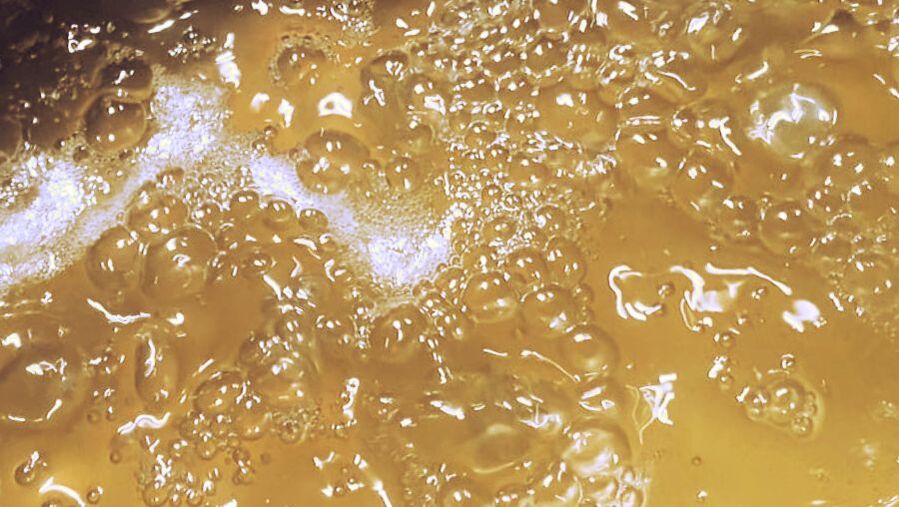
This recipe has been around since the 12th century. It is completely scalable. Also, it is an easy way to use up lemon juice when you are making candied lemon peel.
​Ingredients
  • 500mils of Lemon Juice
  • 500grams of Sugar
Method
  • Prepare glass bottles by putting them on a tray and pouring boiling water over them and the lids. I pick them up using tongs. Put on a tray and dry in the oven on 105 degrees Celsius for 10 minutes. If the lids have a plastic coating, submerge them in a bowl of boiling water and then air dry them.
  • Prepare bottles
  • Freshly squeeze lemons.
  • Measure out lemon juice and sugar into a saucepan.
  • Simmer on medium stirring occasionally.
  • Once it thickens into a syrup it let it cool slightly
  • Pour hot mixture into bottles carefully using a metal funnel. Place the lids on firmly. Gently tip the bottles to the side and rotate so that the heat of the mixture kills any potential bacteria left on the lid. Store in cupboard. 
Background
Syrup of Lemon
“Take lemon, after peeling off the skin, press it [to a pulp] and take a ratl [1 ratl=468g/1lb] of juice, and add as much of sugar. Cook it until it takes the form of a syrup.
Its advantages are for the heat of bile; it cuts the thirst and binds the bowels.”
Source: page 18 Anonymous Andalusian Cookbook Kitab al tabikh fi-l-Maghrib wa-l-Andalus fi `asr al-Muwahhidin, li-mu'allif majhul. The Book of Cooking in Maghreb and Andalus in the era of Almohads, by an unknown author.

[88] To make Syrupe of Lymonds. Take your Lymonds, and cut them in halfes, and betwixt your fingers juyce them, and the liquor that runnes from them wil be very cleare, then take to a pint of juyce, a pound and a quarter of hard suger, which is very white and boyle it to a Syrupe, and it will keepe excellent well.
A Closet for Ladies and Gentlewomen (1608) London: Printed [by F. Kingston] for Arthur Iohnson,1608
Picture
0 Comments

Cherry Jam

29/1/2022

0 Comments

 
Picture
Gluten Free. Dairy Free. Vegan.
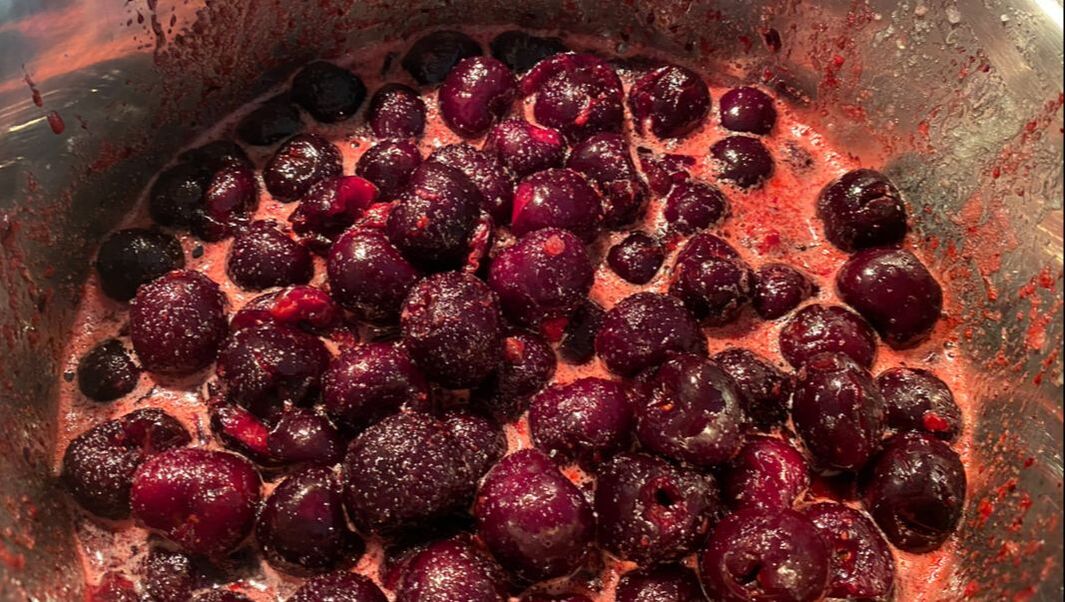
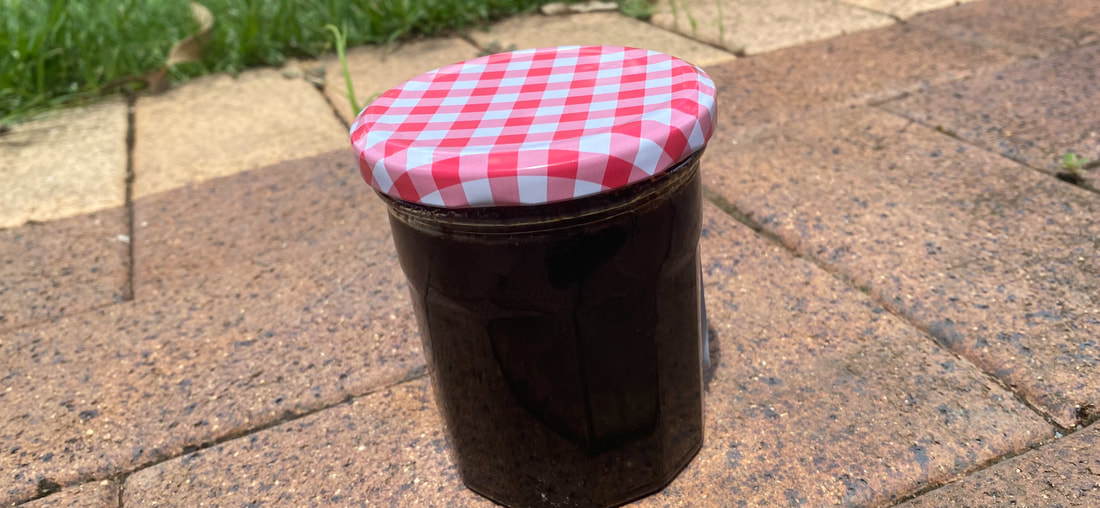
I don’t know where I got this recipe. I feel like I have always known that the ratio of stone fruit/berries to sugar is 2:1. We have a glut of top quality cherries right now (just $30 for 5kg of grade A). I can never find really good cherry jam, the really dark and treacly kind, and this way I know exactly what is included. Also,  this recipe is completely scalable up and down. The proportions stay the same.

Ingredients
  • 1kg Cherries
  • 500g Sugar
  • 50 mils Lemon Juice
Method
  • Prepare glass jars by putting them on a tray and pouring boiling water over them and the lids. I pick them up using tongs. Put on a tray and dry in the oven on 105 degrees Celsius for 10 minutes. If the lid have a plastic coating, submerge them in a bowl of boiling water and then air dry them.
  • Wash cherries.
  • Use a cherry pitter to pit all cherries. (so, so much better than doing by hand!)
  • Put in a large pot so it is only half full
  • Lightly mash the cherries with a potato masher to break them open
  • Mix in all sugar and lemon juice
  • Leave for with the lid on the pot for an hour or two to macerate.
  • Take off lid and heat up to simmer and stir occasionally. It should not be so hot that there is any chance it will stick to the bottom.
  • A pink froth will form on top. Skim this off carefully and discard. Try not to discard anything else.
  • Cook until it reduces by about 1/3 or until it thickens (you can test by putting a few drops on a cold saucer, waiting until it cools and running your finger through it)
  • The longer it cooks, the thicker it will be.
  • Pour hot mixture into the jars. Place the lids on firmly. Gently tip the jars to the side and rotate so that the heat of the mixture kills any potential bacteria left on the jar lid. This should also help the lid become concave and vacuum seal. Store upright jars in cupboard and then refrigerate once opened.
Background 
Historical preserves of cherries used less sugar and would likely preserve the shape of the fruits with an end product being cherries in light syrup than jam. 
​
“To preserue Cheries.
TO euery pound of Cheries take a pound of suger, that done take a fewe Cheries and distreine them to make your syruppe, and to euerie pound, a pound of Suger, and Cheries, take a quarter of a poūd of syrrup, and this done take your syrrup and Suger, and set it on the fire, then put your Cheries into your sirrup, and let them boyle fiue se∣ueral times, and after euerie boiling skum them with the backeside of a spoone.”
Thomas Dawson (1587) Good huswifes jewell https://quod.lib.umich.edu/e/eebo/A19957.0001.001
Picture
0 Comments

Lemon Butter

3/6/2020

0 Comments


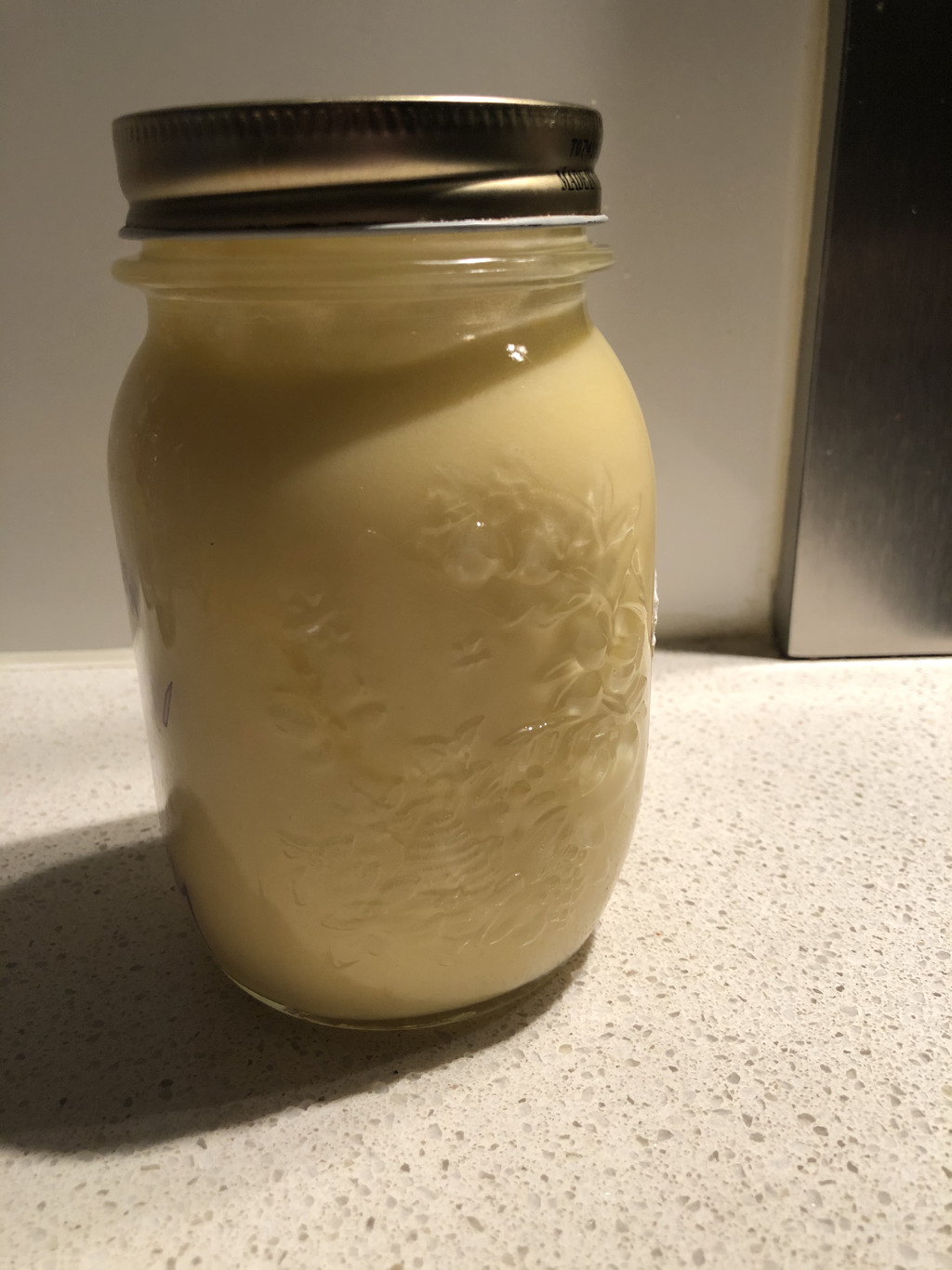
Modern (with long history). Gluten Free.
Picture
I modified this recipe from Julie Goodwin's lemon butter recipe
Ingredients
  • 4 eggs
  • 1 cup of sugar
  • 125 grams of unsalted butter at room temperature (not melted)
  • very fine zest of 2-3 lemons
  • ½ cup lemon juice (about 2-3 lemons)
Method
  • Prepare two small glass jars by putting them on a tray and pouring boiling water over them and the lids. Dry in the oven on 120 degrees Celsius for 10 minutes. 
  • Crack eggs into a medium sized Pyrex/heat proof glass bowl and beat them well.
  • Add sugar and beat into the eggs until combined.
  • Put bowl over a simmering (medium to low heat) pot of water and beat in the lemon, butter and zest. 
  • Put on a timer for 20 minutes. Keep beating for 20 minutes (you can use an electric whisk on low) it will thicken.
  • Using a confectionery thermometer, make sure the mixture just exceeds 70 degrees Celsius to kill any potentially harmful bacteria in the eggs. Do not go above 75 degrees Celsius. 
  • Pour warm mixture into the jars. Place the lids on firmly. Gently tip the jars upside down so that the heat of the mixture kills any potential bacteria left in the jars. Store upright jars in the fridge. 
You can find some basic history about lemon curd located at British Food: A History. 
0 Comments

Rosewater Syrup

18/5/2020

0 Comments


Historical. Gluten Free. Dairy Free. Vegan.
Picture
Rosewater syrup has many modern and historical uses. I am using it as a cordial, but it has been used in sweets, pastries and all manner of dishes as a spice.

Once my Dad's roses bloom in August, I will be trying my hand at making rosewater from scratch. This is the quick version.

Ingredients
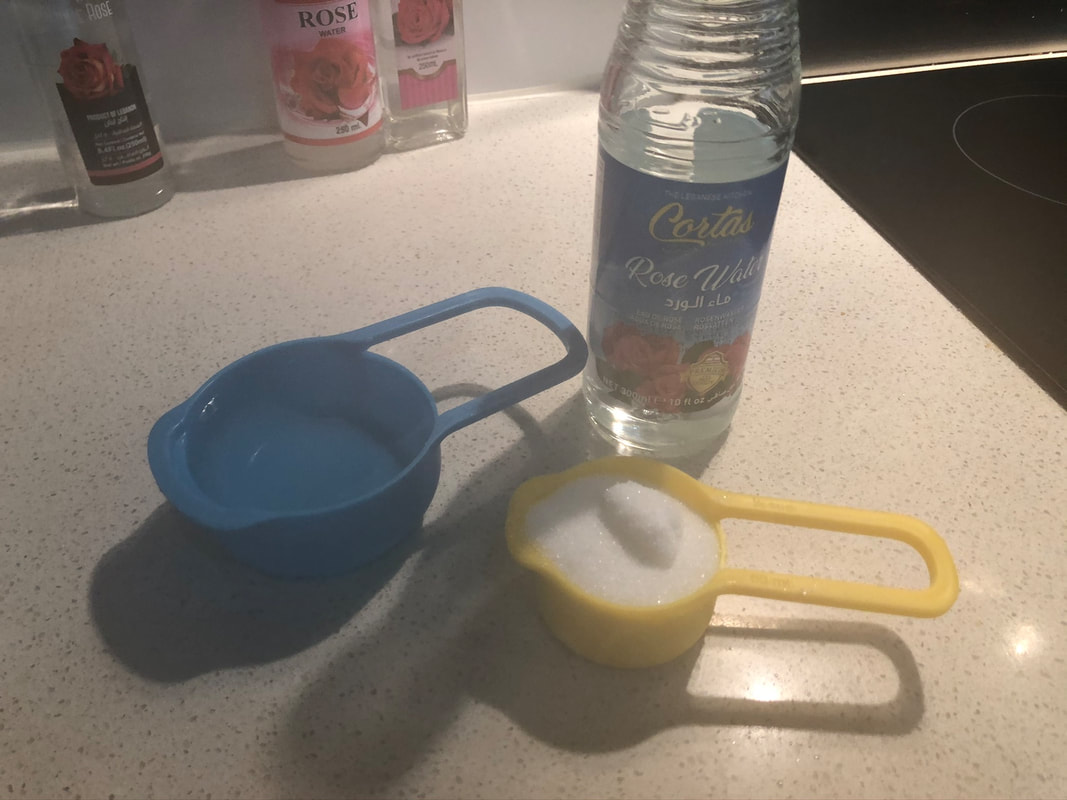
2 parts rosewater to 1 part sugar
e.g. 1 cup of rosewater to 1/2 cup of sugar
I use Cortas brand rosewater for this as it keeps its flavour when used in this kind of reduction.  

Method
Simmer on medium heat in small saucepan until a light syrup is formed. Pour into a sterilised glass jar or bottle. Keeps okay at room temperature. 
​
Notes
Although not found in historical recipes, adding the juice of half a small lemon (make sure it has no 'bits' / pith) to each cup of rosewater enhances the flavour. 

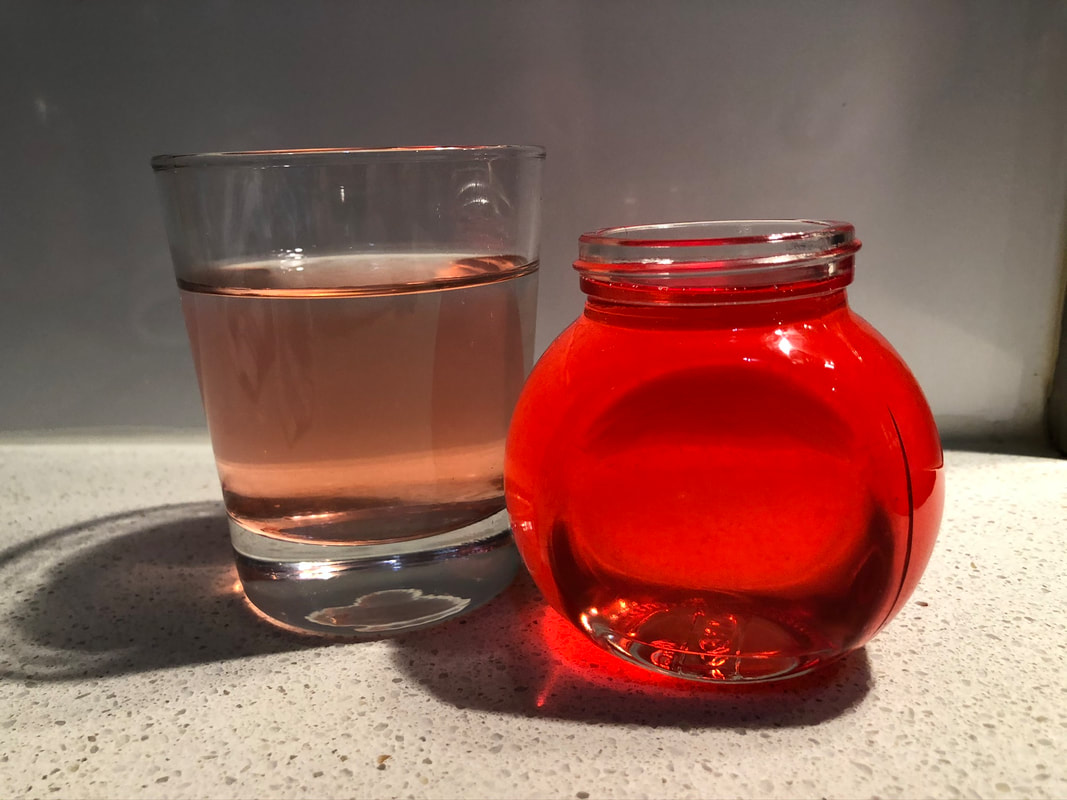
​I have also added red food colouring to the modern version.

Background
The following is a thirteenth century (13th C) for rosewater syrup. 
The Recipe for Making a Syrup of Julep
Take five ratls of aromatic rosewater, and two and a half of sugar, cook all this until it takes the consistency of syrups. Drink two ûqiyas of this with three of hot water. Its benefits: in phlegmatic fever; it fortifies the stomach and the liver, profits at the onset of dropsy, purifies and lightens the body, and in this it is most extraordinary, God willing.  
http://www.daviddfriedman.com/Medieval/Cookbooks/Andalusian/andalusian10.htm
Note: 
  • 1 ratl = 12 uqiya = 16 ounces = 1 pint or 1 pound.
  • 1 uqiya = 10 dirham (one dirham = 3 grams)
  • Julep comes from Persian gul- rose + -ab water
 
'Libre de Diversis Medicinis'

in the Thornton Manuscript (MS. Lincoln Cathedral, A.5.2). Edited by Margaret Sinclair Ogden. Published for the Early English Text Society by Humphrey Milford, Oxford University Press. Amen House, E.C. 4. England. 1938. Text circa early 1400 CE. Page 60. Posted by "Crystal A. Isaac" 
"Rose Syrup: Tak an vnce or twa of roses & sethe tham in water to the ij partis be sothen in. Than clene it thurgh clathe & do suger ther-to & sethe it to it be thikk as hony & vse as thu dose the tother."
Florilegium: Rose Syrup 

Serop of Roses – Rose Jam
Elinor Fettiplace’s Recipt Book, 1604
‘To Make A Serop Of Roses. Take damask rose buds 6 handfuls,. & cut off the tops, and take a quart of fair running water, & put the roses therein. Put them in a basin & set them over the fire, that the water may be warm one day and night. The in the morning squeeze the roses hard between your hands out of the water, & put in as many fresh, & let them stand still on the fire. This do 9 times, then take our our roses, clean out of the water, & put in as much sugar as will make it sweet. Boil til it comes to a syrup; you must put to every pint a pound of sugar.’p234 The Tudor Cookbook: From Gilded Peacock to Calves’ Feet Pie by Terry Breverton.
Picture
0 Comments

Pumpkin Soup

14/5/2020

1 Comment

 
Picture

Modern. Gluten Free. 

This is the kind of recipe you can make your own with spices and toppings you might like. It doesn't use exact quantities and produces between 12-15 serves (based on 400-500ml per bowl). It is easy to freeze and is a flavourful, cheap meal at less than $2 Australian per serve. 

Ingredients
Soup
  • 1 Bacon hock
  • 1 large pumpkin
  • 1 fennel bulb
  • 5 cups of water 
  • 1 heaped tablespoon ground ginger
  • Salt 
  • Pepper

Topping
  • 2 tablespoons of lemon juice
  • 3 tablespoons of cream (I use lactose free)
Method
  • Preheat oven to 160 degrees Celcius
  • Roast hock in oven for 1.5 hours.
  • Remove skin and seeds from pumpkin. Cube.
  • Slice fennel bulb thinly.
  • Remove meat from hock. Cut of skin in one or two pieces. Cube meat.
  • Place bone, skin and meat of hock in a six-seven litre pot with the pumpkin, fennel and 5 cups of water.
  • Cook on medium heat for an hour or so until pumpkin is soft.
  • Remove bone and skin from pot with tongs.
  • Use a stab blender to make into soup. Taste.
  • Add salt to taste (at least 2 tablespoons)
  • Add pepper to taste (a least 1 tablespoon).
  • Stir through at least a tablespoon of ground ginger. You may also like to add allspice, fresh ginger or other spices at this time. Stir and taste between adding spice each time.
  • Ladle into bowl. 
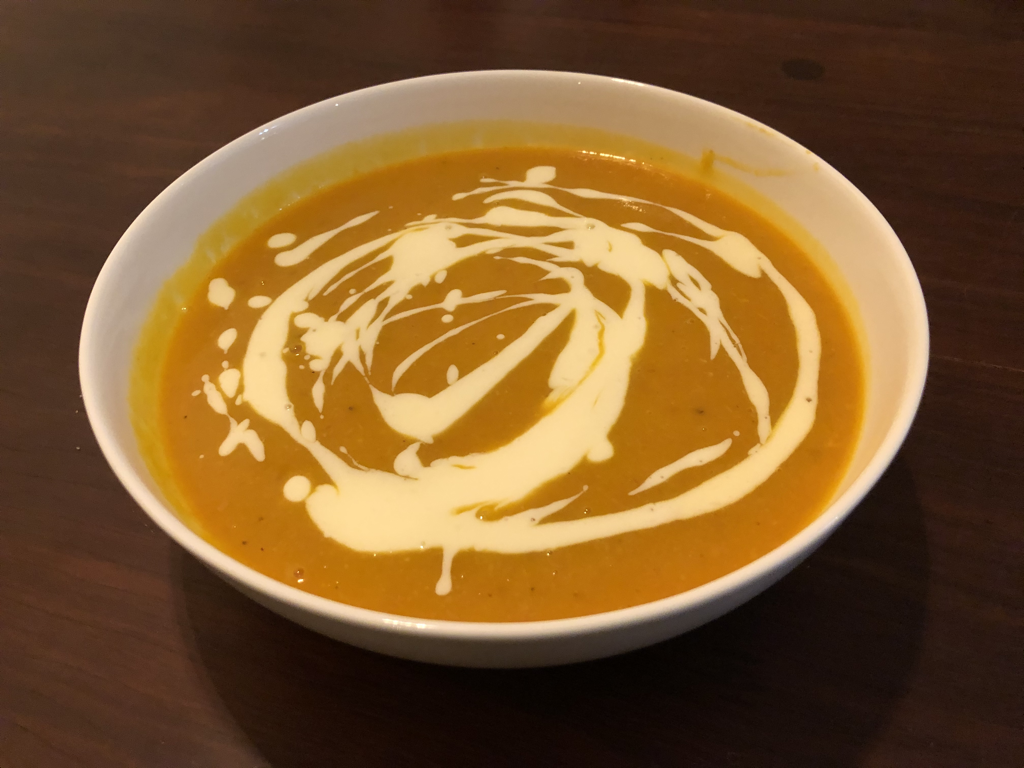
  • Mix lemon juice and cream. Drizzle on top of soup. 
​Lovely on a cool night!
1 Comment

Jumballs / Iumbolls

9/5/2020

0 Comments


Spiced shortbread. ​Gluten Free. Coriander/Cilantro Free. 

Picture
Background
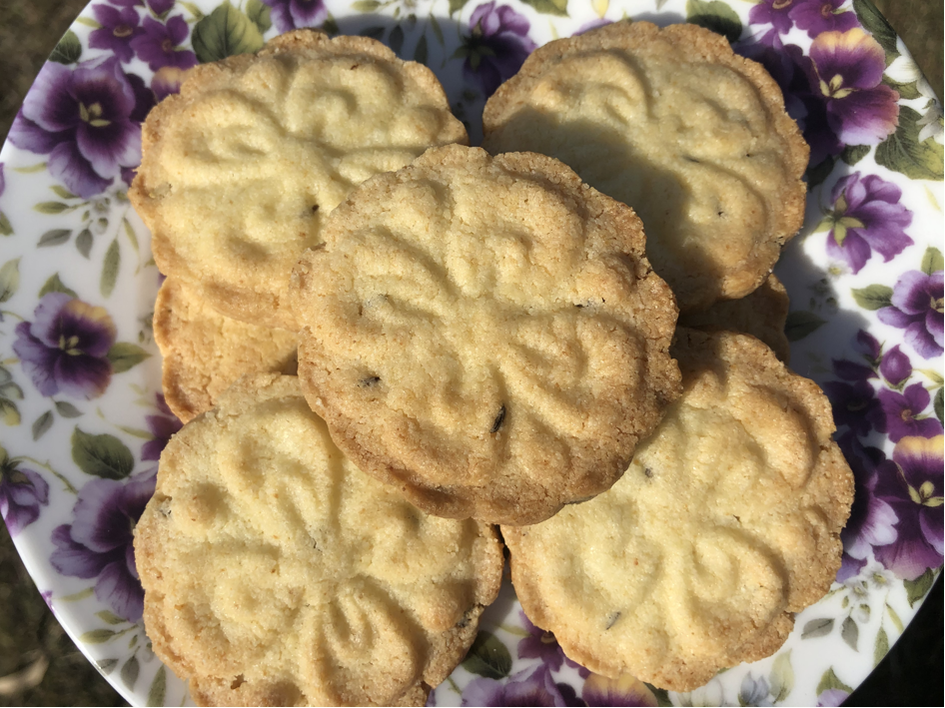
These have a long history and are popular in my re-enactment group. Usually they are made with glutinous flour and coriander seeds, but as I am a celiac and allergic to coriander, I have replace them with gluten free flour and fennel seeds.

These come from Sir Hugh Platt ‘Delightes for ladies’, which is translated on page 48 of ‘A Miscellany’ (10th Edition) by David Friedman and Elizabeth Cook.

To Make Iumbolls
Take ½ a pound of almonds being beaten to paste with a short cake being grated, and two eggs, two ounces of caraway seeds, being beaten, and the juice of a lemon: and being brought into paste, roll it into round strings: then cast it into knots, and so bake it in an oven and when they are baked, ice them with rose water and sugar, and the white of an egg being beaten together, then take a feather and gild them, then put them again into the oven, and let them stand in a little while, and they will be iced clean over with a white ice: and so box them up and you may keep them all the year.
  • ¼ lb almonds
  • 1 egg
  • 1 oz shortbread
  • 1 t[easpoon] rose water
  • 1 oz [ounce] caraway seeds
  • ½ c[up] sugar
  • ½ lemon, juiced
  • ½ egg white
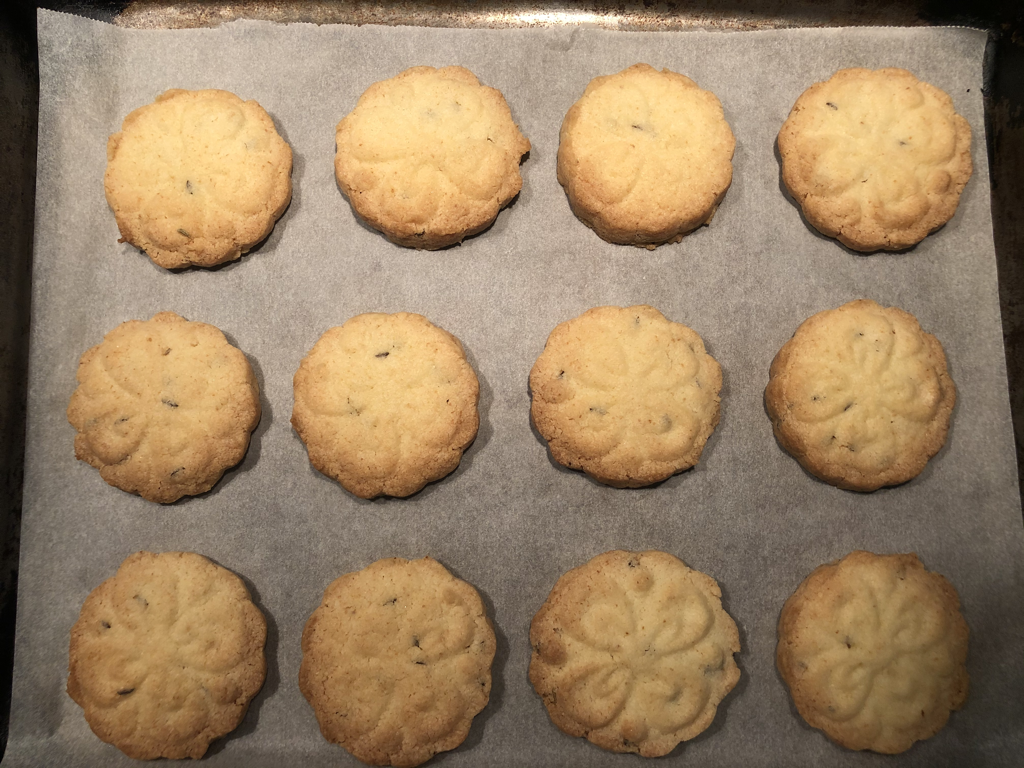
I decided I wanted to focus on the flavour without the icing so I adapted this recipe from My Lady Chanworths receipt for Jumballs  which is sourced from a 1690-1802 recipe book LJS 165 and instead of making lozenge size biscuits, I have used a biscuit press I was gifted by my dear friends Mestra Acacia de Navarre and Master Drake Morgan.

My recipe makes 4 dozen biscuits. 
Picture
Ingredients
Dry
  • 225g white sugar
  • 340g gluten free plain flour
  • 55g almond flour
  • 1.5 teaspoons of fennel seeds
  • 1 teaspoon of caraway seeds
Wet
  • 225g salted butter (melted)
  • 5mils/1 teaspoon strong rosewater (Queen brand)
  • 2 egg yolks (beaten)
Materials
  • Large mixing bowl
  • Small mixing bowl
  • Small microwave safe bowl (for melting butter)
  • Fork (for beating eggs)
  • Mixing spoon
  • Rolling pin
  • Scales
  • Baking paper
  • 2-4 baking trays
  • Mould or cutter if using one
Method
  1. Preheat oven to 175 degrees Celsius.
  2. Sieve sugar, plain flour and almond flour into a large mixing bowl.
  3. Stir through fennel and caraway seeds
  4. Mix wet ingredients together
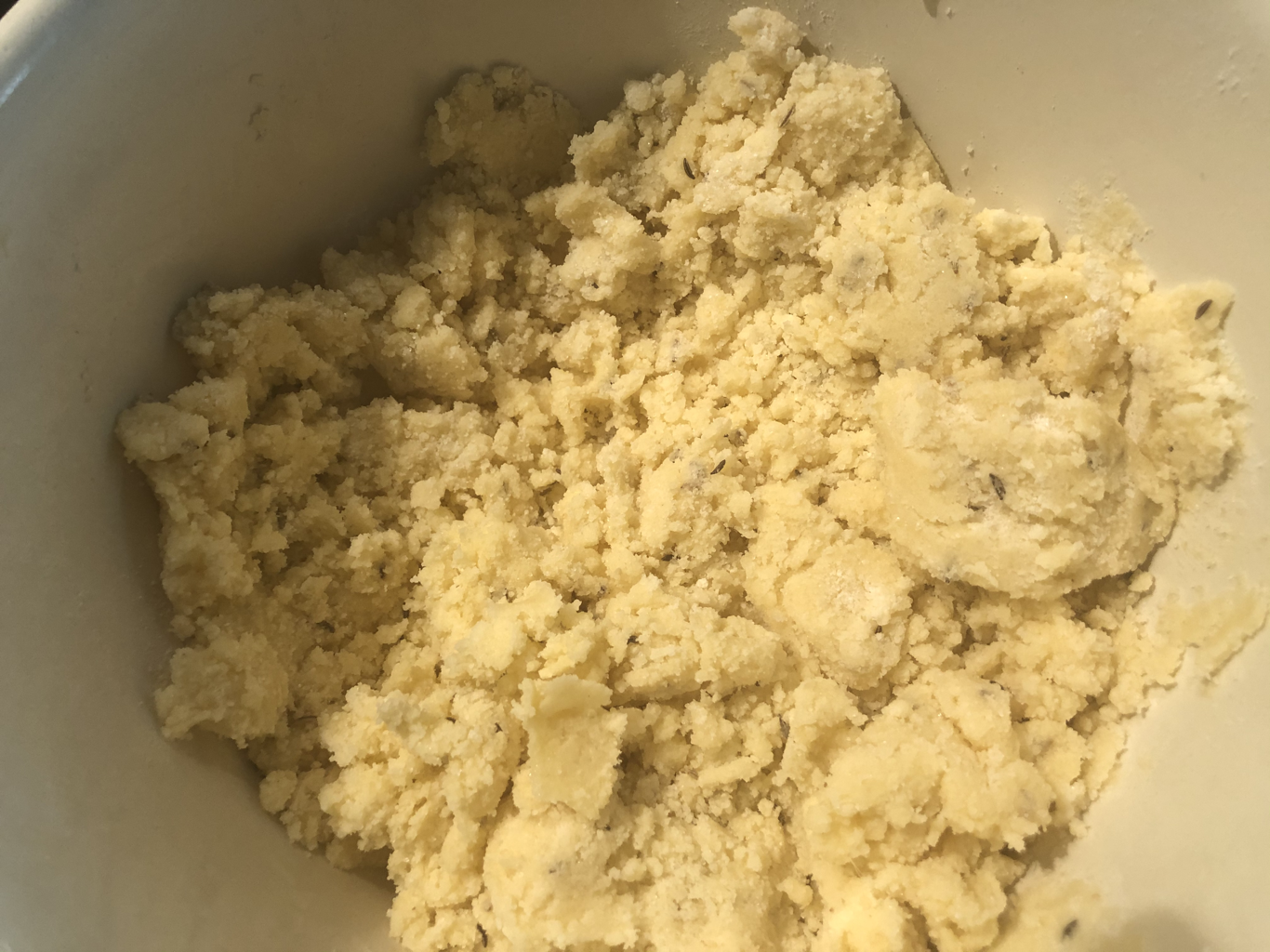
  5. Slowly mix wet ingredients into dry ingredients and combine until it crumbs.
  6. Press into two balls of dough.
  7. Refrigerate for an hour.
  8. Roll out each ball of dough to about 1cm thickness on a lightly floured surface.
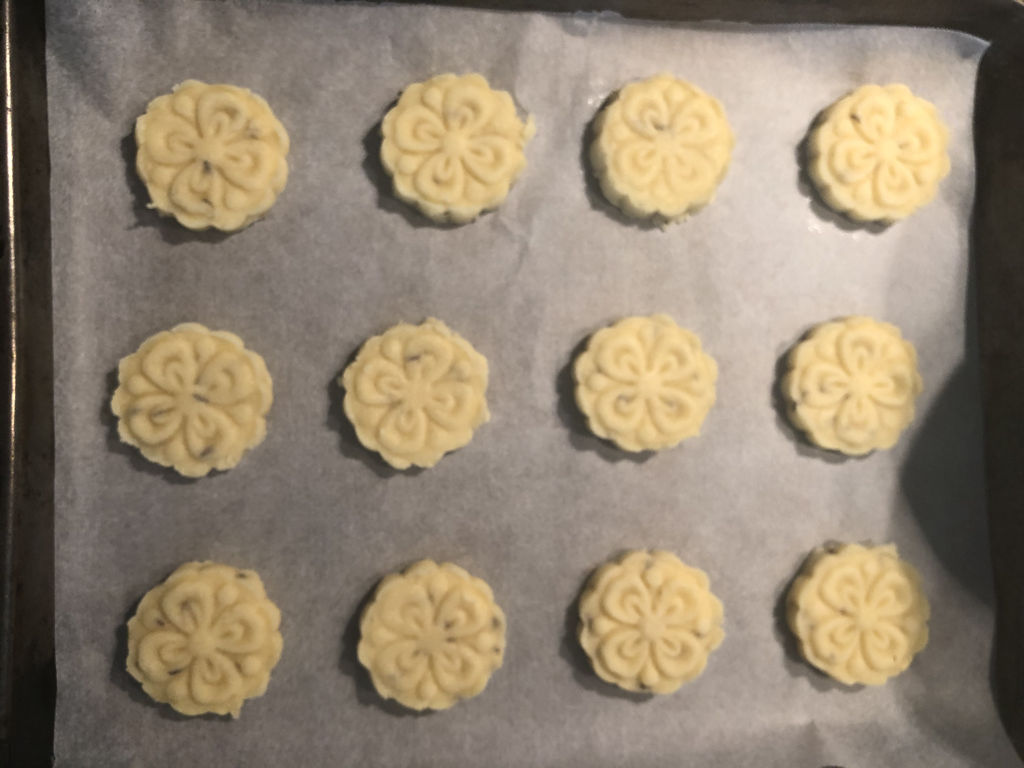
  9. Press/cut into the shapes you want
  10. Place on baking paper on a baking tray. 
  11. Bake for 12 minutes (they will be brown on the edges) on centre shelf of the oven. NOTE: You will need either need to rotate your trays or have four baking trays as this makes 4 dozen biscuits and you need to make sure you give them lots of space to spread out on the tray as they cook.
  12. Let them cool on the tray.
  13. Put them in an airtight container for storage. 
Picture
Crumbed mixture
Picture
Shaped dough
What I will try next time
The flavour was a bit too subtle for me, I would have preferred a stronger flavour of rosewater and spice. I don’t much like the flavour of caraway seeds, but the fennel is lovely. I think it would be nice to try cardamom and fennel seeds and double the rosewater in my next batch. I am sure each cook had their own version of a buttery spiced shortbread, so I would like to develop my own. More modern recipes, particularly in America, commonly have recipes for honey jumballs.

Also, it would be nice to try the icing next time from the Sir Hugh recipe.

Finally, 4 dozen biscuits is too many for my household so I would look to halve the recipe.

With these adjustments, that would mean my ingredients and change in method for the next batch will be:
  • 110g white sugar
  • 170g gluten free plain flour
  • 30g almond flour
  • 1.5 teaspoons of fennel seeds
  • 3 teaspoons ground cardamom
  • 110g salted butter (melted)
  • 10mils/2 teaspoons rosewater
  • 1 egg yolk (beaten)
I would also like to cast them into knots and the icing would be the following beaten together.
  • 1 teaspoon rose water
  • ½ cup sugar
  • ½ egg white
Then cooked again.
Then a very thin layer of icing sugar and rosewater (only) would be applied. 
0 Comments

French macarons

9/5/2020

0 Comments


Gluten Free. Modern.

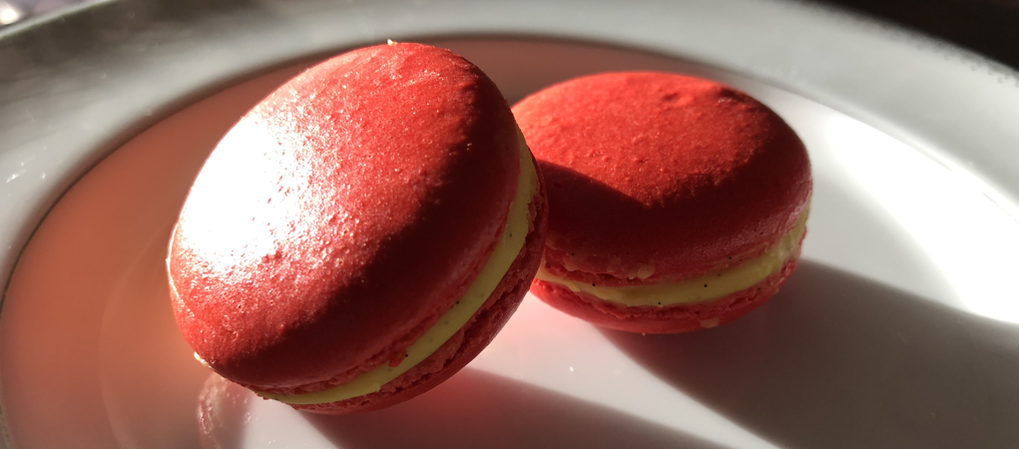
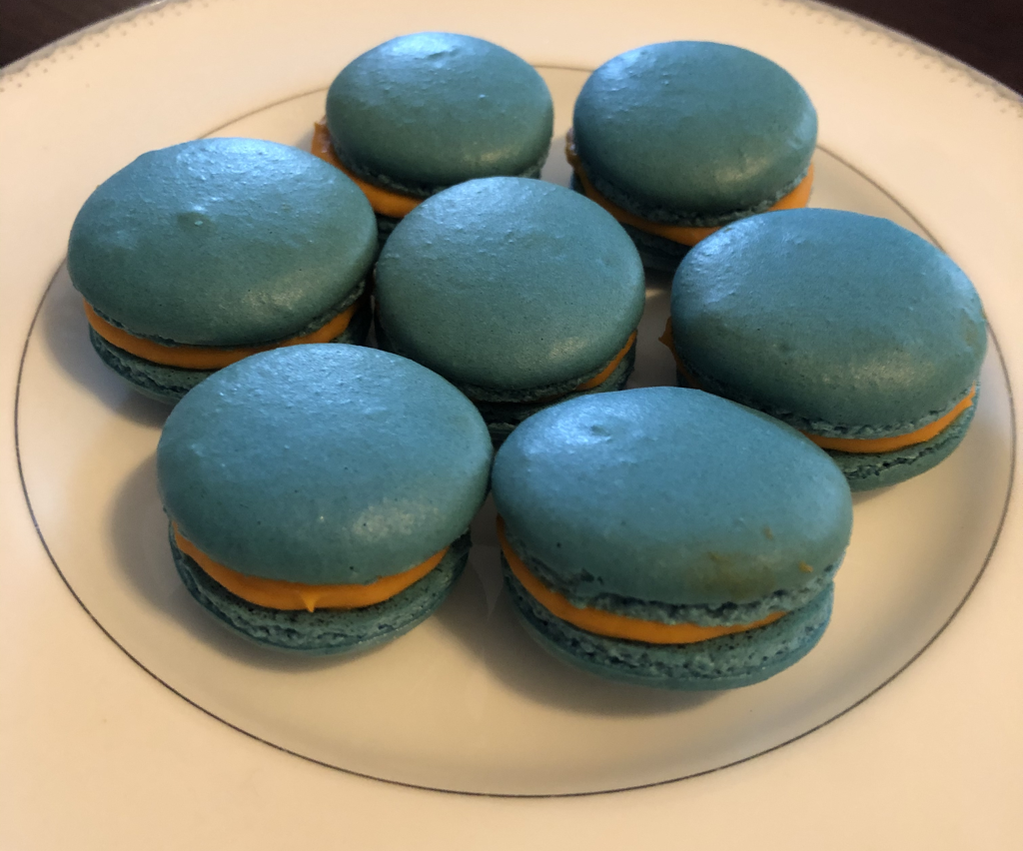
Picture
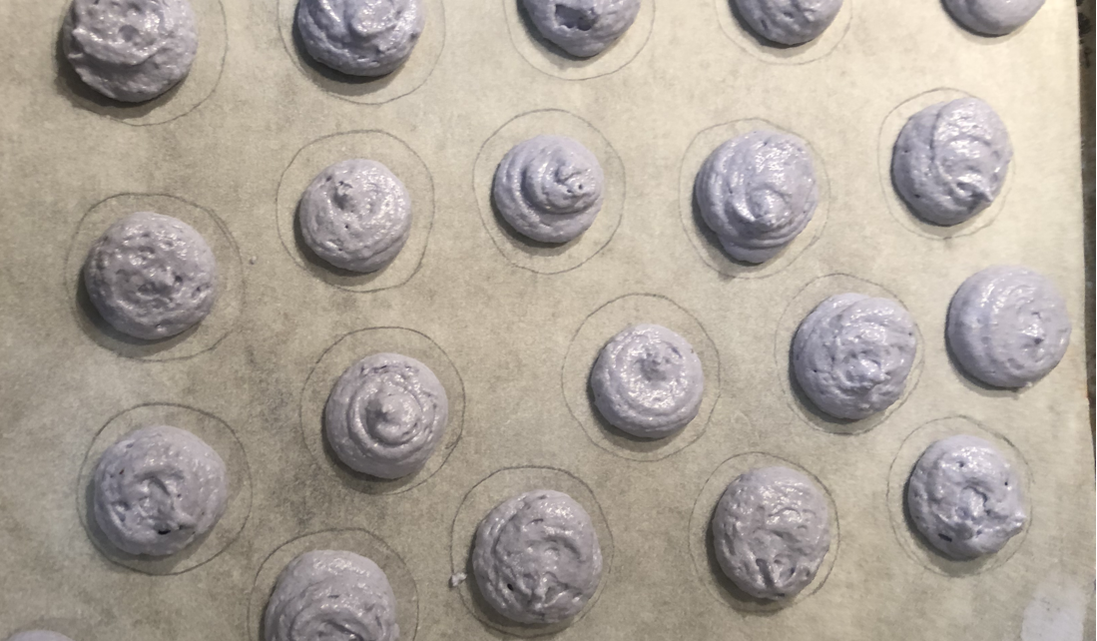
French macarons are considered very difficult to do well. That is not really true. The main issue is that you need to do three or four batches to work out what you do right or wrong and how they work with your oven. You might succeed the first time, but you should pay close attention and take notes (and photos) before putting your biscuits into the oven, including noting:
  • the exact size of the biscuits 
  • the batter and how responsive/mixed it is
  • how shapely the biscuits are once the trays have been slapped on the surface to level
  • humidity of the day (too humid, they won't work)
The main thing that I have always been warned about for meringues is not to stir or fold very much so as to keep the air in the egg white, but I found that I did much more folding of this mixture than I expected. In fact, the first and third batters were not as folded, and did not come out as well (particularly the first batch).

Before I tried any particular recipe, I did my research. Looking at a number of sites, including:
  • Preppy Kitchen
  • Cake Crumbs
  • Sally's Baking Addiction
  • Sweet and Savory
  • Let the Baking Begin
  • Taste
I eventually adapted The Best French Macaron Recipe from Indulge with Mimi. The reason I chose this is because it had a lot of detail.​
Picture
Biscuit Filling
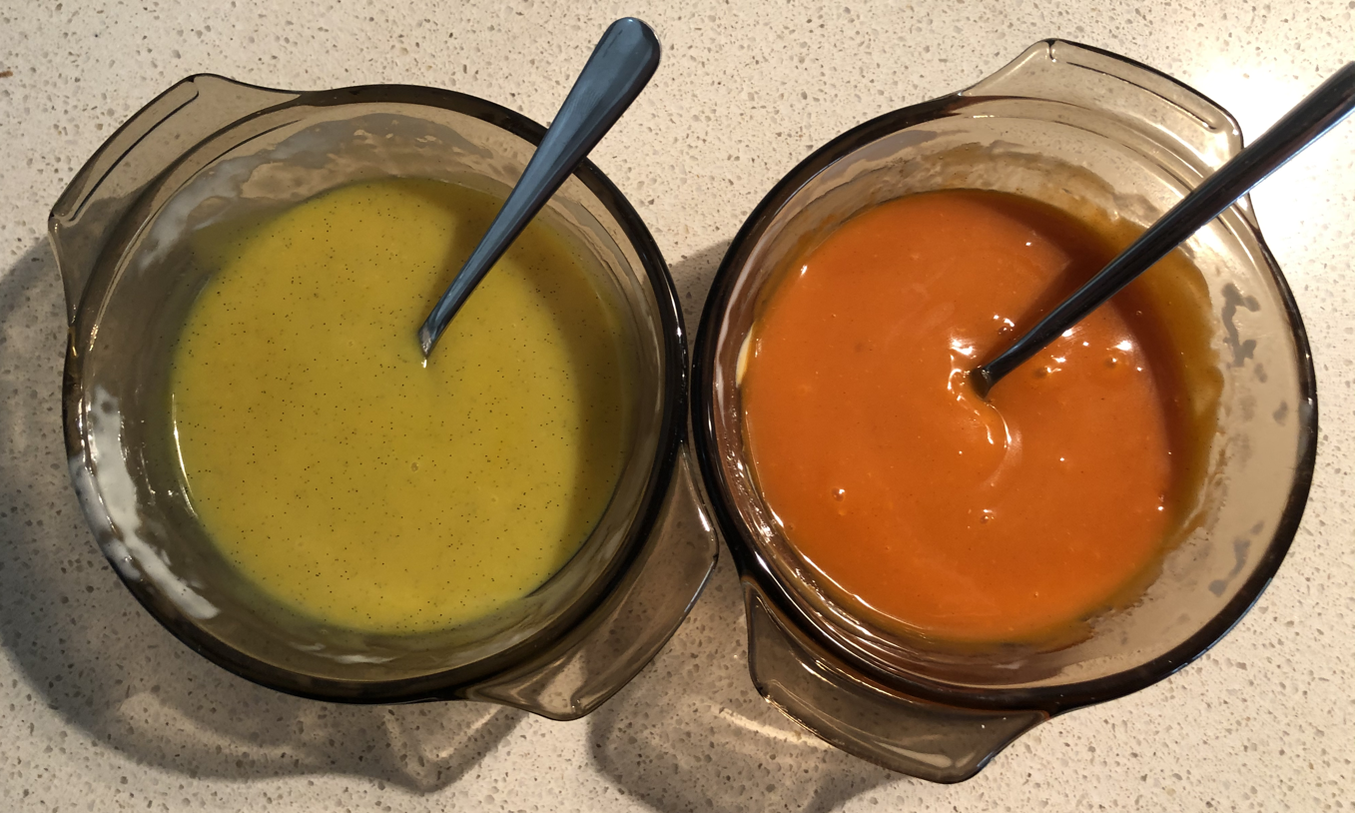
You can make the filling anytime. Be adventurous. Lemon butter. Ginger or glacier ginger. Vanilla buttercream. Ganache. As long as it is smooth and will set nicely, you can try your hand at anything.

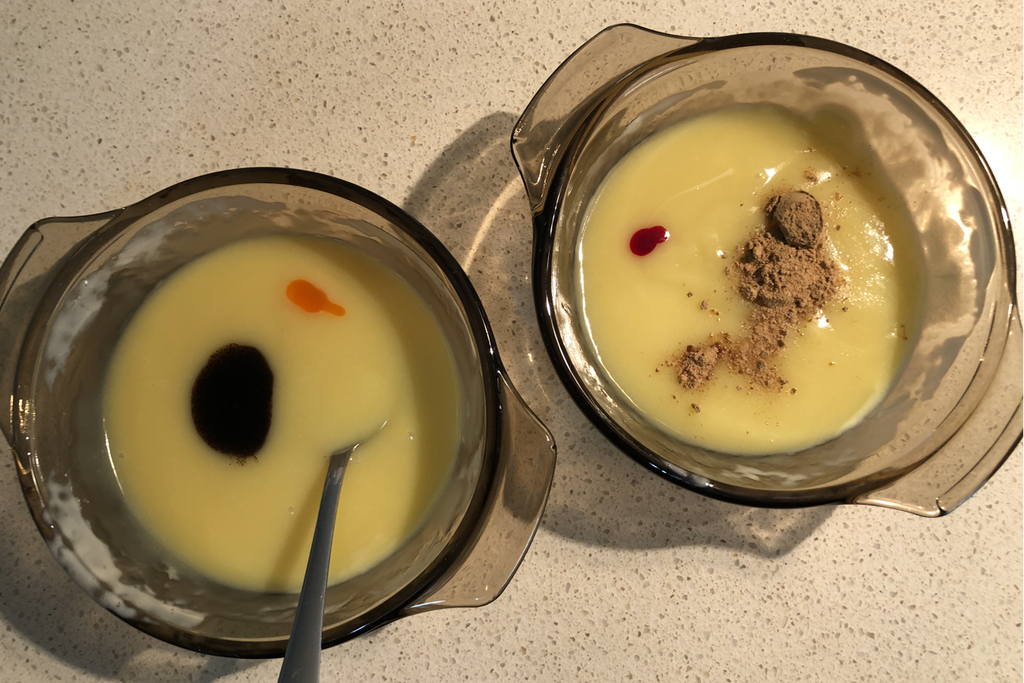
I made two white chocolate ganaches for my macarons, one vanilla flavour and one ginger flavour. Ganache is roughly 1 part cream to 2 parts chocolate.

Ingredients
  • 90g of white chocolate (I use Poppy’s Chocolate which is Gluten Free)
  • 40 mils of lactose free cream (or 2 Australian tablespoons) suitable for whipping  
  • A couple of drops of gel colour
  • 4 teaspoons of flavour (liquid or dry)
Method
  1. Heat the cream in the microwave until hot but not boiling. Put in the chocolate and mostly melt in the microwave.
  2. Pull out the chocolate/cream while the chocolate is still partially formed and stir until no lumps of chocolate are still showing.
  3. Stir in the colour and flavour
  4. Refrigerate (lasts for at least as long as the expiration date on your cream).
Picture
Meringue Biscuit

Preparation
Day before you cook. Wash your jar or glass in soapy water, rinse thoroughly, spray with white vinegar and dry with kitchen towel. Separate out egg whites from 2-3 eggs and measure out 50g of egg white into your clean glass. Cover with plastic wrap, use a fork to put a few holes in the top and refrigerate for 24 hours (can be up to 72).
An hour before you wish to cook, take the egg whites out of the fridge. Wash all your bowls and utensils, dry, spray with white vinegar and dry with paper towel. This is absolutely critical.
On the shiny side of your baking/parchment paper, draw a circle 3cm in diameter. Allow 2cm between circles on your parchment paper. Make up enough parchment paper for three trays. You will be putting the baking paper shiny side down into the baking trays.
Set up piping bag and place in a tall glass. This will help you when filling the bag and if you need to refill or get a better grip on the bag.

Ingredients
  • 65g Icing Sugar
  • 65g Almond Flour
  • 45g Castor Sugar
  • 50g Egg white
  • 1/8 teaspoon cream of tartar
  • 2-5 drops of gel colour
Biscuit flavour ingredients:
  • 1.5 to 2.5 teaspoons of rosewater (my favourite) OR
  • 1.5 to 2.5 teaspoons of water & 5 teaspoons of ground ginger OR
  • 1.5 to 2.5 teaspoons of almond oil OR
  • 1.5 to 2.5 teaspoons of vanilla extract OR
  • any combination which lets you add 1.5 to 2.5 teaspoons of fluid and doesn’t have too much powdered flavour.
Method
  1. After preparing your bowls and utensils, sift the icing sugar and almond flour into a bowl.
  2. Place the egg whites in a large mixing bowl, and using an electric mixer, whisk on high for less than a minute until they form big and foamy bubbles.
  3. Keep beating and very slowly add the castor sugar, sprinkling over the top.
  4. Once the sugar is incorporated (and before you get stiff peaks in the whites), add in the cream of tartar and your gel colour. Keep beating until you get stiff peaks. You should be able to hold the bowl upside down without the egg whites coming out when they are stiff (don’t try it unless you are sure!).
  5. Fold in half the dry mixture about a tablespoon at a time by sprinkling over the top and using a bowl scraper to fold over the mixture. Knowing when to stop is what you need to know here.
  6. Before you fold in the last of your dry mixture, fold in 4 teaspoons of your fluid (and add any dry flavour/spice at this time) – keep the fifth teaspoon in reserve.
  7. Fold in the rest of the dry mixture.
  • NOTE: if the mixture looks too dry (it should be a bit like rubbery putty, often referred to as lava) then add the fifth teaspoon of fluid and fold in. It should look fully incorporated and not be able to completely hold its shape.
  1. Put batter into the piping bag – filling it half way. If you overfill, it will spill out the top when you squeeze it.
  2. Lift each of the four corners of the baking paper and put a small blob of mixture down, this will hold the paper down.
  3. Carefully pipe onto the baking trays so that the mixture stays within the bounds of the circles.
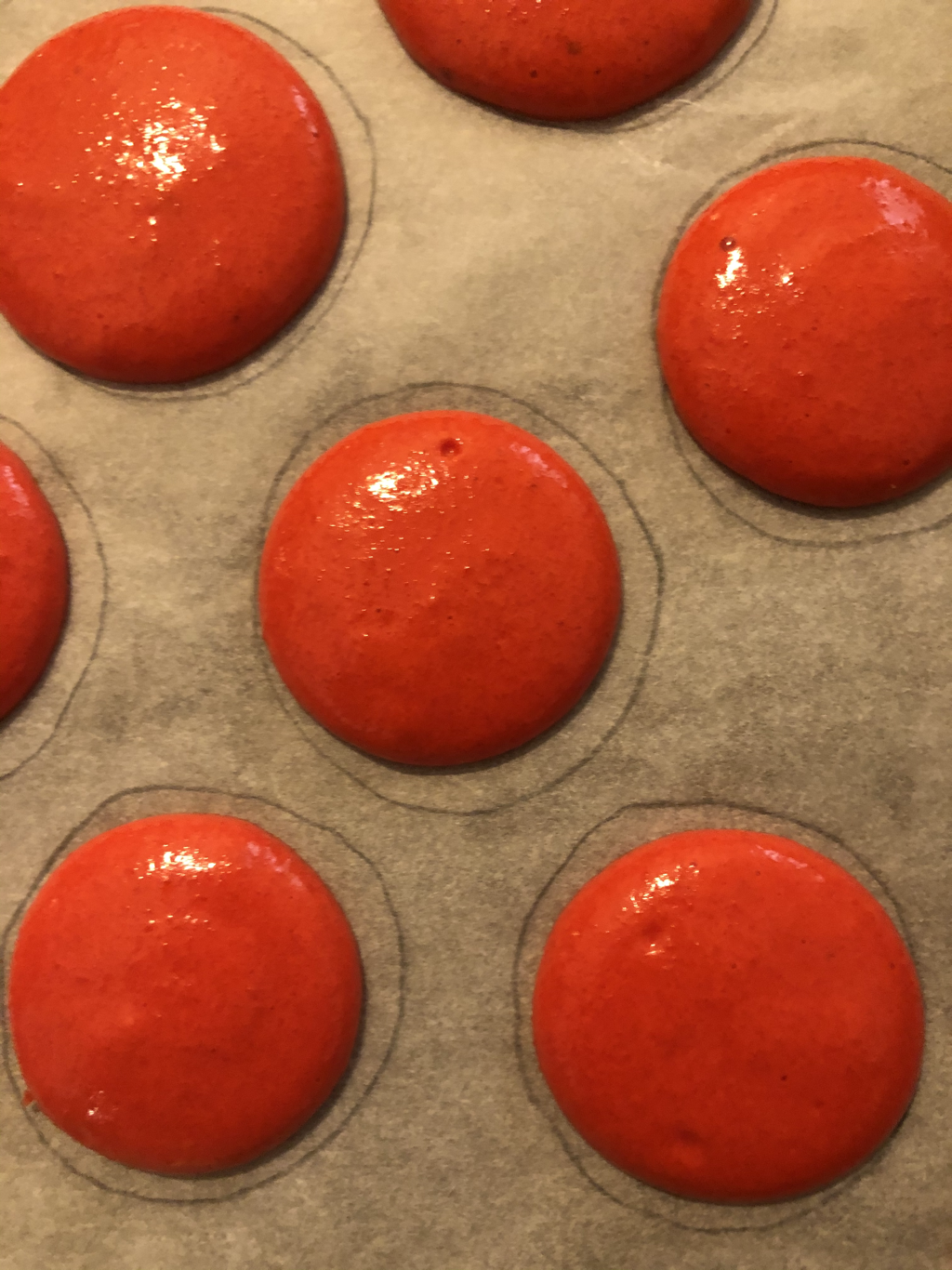
  4. Once all circles are piped, you will have some irregularities on the surface of the biscuits and bubbles inside them from piping. Slam the baking tray on the surface several times, you can be quite vigorous, then turn the tray around and do the other side. The tops of the biscuits should flatten out. This will help make them look nice and stop them popping while baking.
  5. Pipe the rest of the mixture onto the other baking trays and follow the same instructions.
  6. Put all trays out of the reach of little paws and fingers for an hour (this allows the tops to dry and gives the biscuits their trademark shine).
  7. Preheat the oven to 140 degrees Celsius.
  8. Bake one tray at a time in the middle of the oven for 10 minutes each. Do not be tempted to open the oven while baking.
  9. Leave on the tray to cool.
Picture
Piped and after they have been de-bubbled
Picture
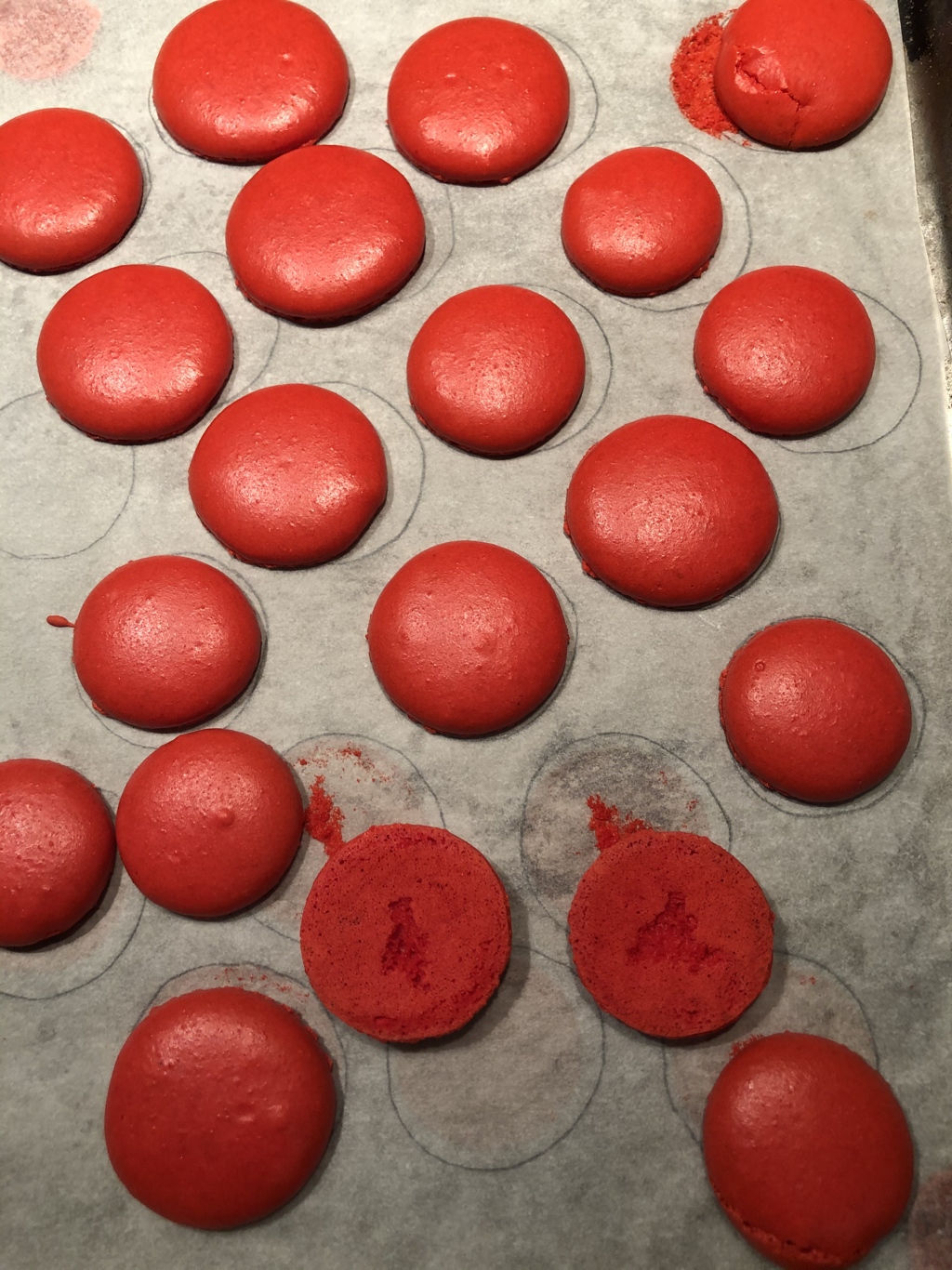
After baking - resist the urge to touch before cool
Assembly
  1. Partially melt your ganache (until it is slurry, not liquid) when you pipe it on the biscuits. If using something else, make sure you can pipe it.
  2. Place filling in piping bag.
  3. Make sure your hands are very clean and dry.
  4. Pipe a blob onto one biscuit and put another half on top and gently press so the filling just reaches the edges of the biscuits.
  5. Place biscuits in a container and refrigerate for at least 2 hours (although 24 hours is better). 
Diagnose your problems
This is batter that was not folded enough, did not have enough fluid and was baked too long.
Picture
The bumpiness on top and lack of gloss, show these were not folded enough. They were also baked at 10 degrees too hot and 2 minutes too long. ​They were still pretty good though. 
Picture
​Just remember to keep a record of everything and you will be able to solve your problems quickly and start turning out top quality macarons in no time.
0 Comments
<<Previous

    Dr. Nicola Boyd

    I am trying to teach myself to be a medieval and renaissance confectioner. This has led to an interest in modern deserts too. 
    Some of these articles are written as Lady Nicola de Coventre for my re-enactment group Society for Creative Anachronism (SCA).

     Articles
    • Almond Macaroons
    • Cherry Jam
    • ​Crème Brûlée
    • ​Excellent Small Cakes
    • French Macarons
    • ​Jelly: Almond milk and port
    • ​Jumballs 
    • Lemon Butter
    • Lemon Syrup 
    • ​Marchpane (16th Century Marzipan)
    • ​Pumpkin Soup
    • Subtleties
    • Sugar Plate ​
Powered by Create your own unique website with customizable templates.